Pages

Showing posts with label history. Show all posts

May 23, 2014

Mary Anning found the fossils of prehistoric animals

Mary Anning found the fossils of prehistoric animals. Today many children like finding out about dinosaurs . When Mary Anning was a child, no one knew about these long-dead animals. Mary's fossil-hunting helped change the way people thought about the world

Mary Anning found the fossils of prehistoric animals


Google digs into history to salute British paleontologist with Doodle


Mary Anning found the fossils of prehistoric animals

Mary Anning was a pioneering paleontologist two centuries ago, at a time when a number of notable women were pursuing the science of finding fossils. Yet it was also an era when, as women, they could not be rewarded with the highest professional recognition for their work.
In Southwest Britain, along the English Channel in Dorset, a young Anning would scour and dig and unearth scientific treasures from the marine fossil beds at Lyme Regis, where she would make a name for herself within the field as collector and researcher and expert


The greatest fossil hunter ever known was a woman from Lyme Regis. Mary Anning's discoveries were some of the most significant geological finds of all time. They provided evidence that was central to the development of new ideas about the history of the Earth.


Mary Anning found the fossils of prehistoric animals


Mary Anning’s contribution had a major impact at a time when there was little to challenge the biblical interpretation of the story of creation and of the flood. The spectacular marine reptiles that Anning unearthed shook the scientific community into looking at different explanations for changes in the natural world. William Buckland, Henry de la Beche and William Conybeare were some of the many scientists who owe their achievements to her. By the time of her death, geology was firmly established as its own scientific discipline.

Mary Anning found the fossils of prehistoric animals

Early life and dangerous living

Mary Anning was born on 21 May 1799 into a humble family of dissenters in Lyme Regis, on the Dorset coast. She and her brother Joseph were the only survivors among 10 children born to Richard Anning and his wife Mary Moore. 
Named after a sister who died in a house fire, Anning herself survived a lightning strike that killed three others. Legend had it the lightning turned her into a bright and observant child.

Selling seashells on the seashore

Anning's father Richard was a carpenter and cabinet-maker who taught his daughter how to look for and to clean fossils. 
They sold the ‘curiosities’ they collected from a stall on the seafront, where they found customers among the middle classes who flocked to Lyme in the summer. 
Their shop was such a feature of the area that some people think that Mary Anning was the inspiration for the well-known tongue-twister 'She sells seashells on the seashore', which was written by Terry Sullivan in1908.

Hardships

The family remained very poor though and when Richard died in 1810 aged only 44, as a result of consumption and injuries following a fall, it brought great hardship.
Young Mary supplemented their meagre income by continuing the trade. She had a good eye for fossils. The cliffs and foreshore at Lyme are rich in belemnites and ammonites, and occasionally reptiles and fishes, deposited from Jurassic seas 200 million years ago. 
Waves from the sea and landslides constantly exposed new supplies. There were good pickings but it was a dangerous living – mudflows, treacherous tides, unstable cliffs and unforgiving seas.

First fabulous find

In 1811, Anning’s brother Joseph found a skull protruding from a cliff. Over a period of months Mary painstakingly uncovered an almost complete skeleton of a ‘crocodile’. 
The specimen was bought by the local lord of the manor Henry Hoste Henley who sold it to William Bullock for his Museum of Natural Curiosities in London. 
This brought Mary Anning’s reputation to the attention of scientific circles. The specimen was later named Ichthyosaurus, the ‘fish-lizard’, by scientists de la Beche and Conybeare.

Help for destitute family

The Anning family had now established themselves as fossil hunters. However they remained poor, almost destitute. 
In 1820 one of their patrons, Lieutenant-Colonel Thomas James Birch, organised an auction of specimens he had purchased from them. 
The sale attracted interest from Britain and all over Europe and raised £400 which he generously donated to them. The publicity consolidated Mary Anning’s fame.

More sensational fossils

Further sensational finds were made. New, more complete skeletons of ichthyosaurs were discovered. This was followed by a complete skeleton of the long-necked Plesiosaurus, the ‘sea-dragon’ in 1823. It proved the inspiration for Thomas Hawkins’ 1840 publication Book of the Great Sea Dragons. 
This was followed by the ‘flying-dragon’ Pterodactylus in 1828, and Squaloraja, a fossil fish intermediary between a shark and a ray, in 1829. 
In the winter of 1830, Anning found a new, large-headed Plesiosaurus, bought for 200 guineas, £210, by William Willoughby, later Earl of Enniskillen. Her discoveries were featured in the lithograph Duria Antiquior, A More Ancient Dorset, prepared by Henry de la Beche around1830 for her financial benefit.

A popular figure

Anning was literate, despite having only a little education. She taught herself geology and anatomy. She was visited by, and corresponded with, eminent scientists of the time. 
Her opinions were sought and she was acknowledged as an expert in many areas, including on the rather unglamorous coprolites (fossil faeces). 
Surprisingly, members of fashionable society called on her at Lyme. Their curiosity was mixed with enchantment at her fossil hunting and her intelligence and humour.
Anning had her detractors too. Georges Cuvier, France’s eminent anatomist, accused her of fraud, an allegation she ably refuted. 
Anning also made the discovery that ink from squid-like belemnites can be ground up and used for drawing.

Dorset home

Anning's life revolved around Lyme Regis. She only left once in her lifetime, for a short trip to London. Her picture shows a middle aged woman, carrying with her hammer, accompanied by her dog, Tray.

Final recognition

Anning died from breast cancer, aged 47. For one with such disadvantaged beginnings, she had gained the respect and imagination of scientific and lay public who gave her recognition in her lifetime. 
Nine years before her death she was given an annuity, or annual payment, raised by members of the British Association for the Advancement of Science and the Geological Society of London. 
She was the first honorary member of the new Dorset County Museum. 
Anning's death in 1847 was recorded by the Geological Society (which did not admit women until 1904) and her life commemorated by a stained glass window in the local church.

May 13, 2014

Wedding tourist on the way Pharaonic Sharm El Sheikh


Wedding tourist on the way Pharaonic Sharm El Sheikh

Celebrated tourist Russian night of her wedding on the way Pharaonic wearing the costume of Queen Cleopatra, and roamed the bride Naama Bay in Sharm El Sheikh mounted on the shoulders , amid hundreds of foreign tourists of various nationalities , until it reached shore , Delta Sharm , where he was greeted by the groom  Egyptian national wearing is the other Ze Antonio

Couple sat inside  Kosha Pharaonic  Atleghan congratulations from the guests  followed by  cutting tart topped with three pyramids and the Sphinx  then gave the bride groom network  followed by a collection of Pharaonic dances

Company organized a celebratory Princess Sina Group Sharm El-Sheikh in the context of attracting and promoting tourism through View the Pharaonic civilization


Said Ahmad Badawi tourist expert and chairman of the company , the primary purpose of the celebration is to send a message to the world that the Sharm el-Sheikh is absolutely safe , pointing out that the Pharaonic era of Ages deals in the history of Egypt  which attract tourists , especially kings such as Cleopatra and Antonio

In a related development  the participants expressed their admiration for the ceremony in the extreme the idea  demanding the company repeating once a month at least

March 20, 2014

Women sat on the throne of Egypt

Women sat on the throne of Egypt

In ancient Egypt, was the woman who holds the reins of governance put things not sanctioned by the traditions of the ancient Egyptians were not familiar .. However, history gave us queens over successive eras .. he was weak when he becomes king rule the country, the military or his commanders Asraobein between members of the royal princes .. resolved by a princess with a good .. either by her or by her marriage and its union with a pair Ahaye her way to seize control of the country Vttoj queen or king crowned her husband's control through ..


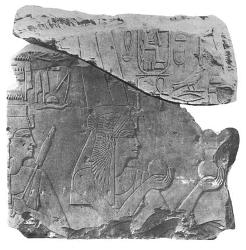
 The reader of Egyptian history since its inception Ttaala queen is " Merritt Nate " from the first family , which ruled in 3050 BC. AD . He was found on a plate buried in the tombs godmother inscribed with her ​​name the title of Queen ..


Though some believe it was the wife of the king's wife " den " of the first family , including archaeological Ahmed Fakhry and Druoton but others , including Arthur and toured Walter warrants believe she was the queen sat on the throne of Egypt and ruled the country days family first .


The Queen mentioned by history, who arrived to the throne in the wake of a weak king Sultan was the wife of King " den "
Some historians believe that it was his brother King " Hbskaf "
, Who tried to revolt against the priests of Ra Vjlt revolution and its end came to power after the verdict and inferred from the titles of the country , which was borne by the left and on the effects , including " Queen of Egypt Khntekaws

September 10, 2012

Travel Loving Luxor

 Travel Loving Luxor

Travel Loving Luxor


As a promising future dawns, take a break to stroll through the nation’s past By Glen Johnson


 As Egypt enters a new phase of its history, there may be no better time to catch up with the past. Luxor, surely one of the world’s greatest travel destinations, is the perfect place to refresh your knowledge of Ancient Egypt.


Sitting along the Nile and featuring numerous temples, tombs, obelisks and statues, Luxor provides the perfect historical getaway, packing enough jaw-dropping sights to make the trip — either a quick weekend trip or longer full-week exploration — perfect for any itinerary.
The ancient ruins of Karnak and Luxor — built in worship of a variety of gods, including the vulture-headed goddess Mut — are must-sees. The largest ancient temple in the world, the religious complex known as Karnak was built over a period of 1,300 years from the sixteenth century BC and is truly awe-inspiring. Similarly, Luxor Temple features the ruins of a former church as well as a mosque associated with a Sufi sheikh.

Travel Loving Luxor


 Luxor Museum, overlooking the west bank of the Nile, is an excellent building: uncluttered, well-ordered and with clearly labeled artifacts including the statue of Hathor, an Ancient Egyptian goddess of love, beauty, music, motherhood and joy. A separate wing houses two royal mummies, which you can view without buying a separate ticket — unlike the Egyptian Museum in Cairo. 


Just down the Corniche, the Mummification Museum houses the preserved remains of many animals and offers an easy-to-follow explanation of Ancient Egyptian funerary practices. 

Travel Loving Luxor


The warren of Pharaonic tombs and temples on Luxor’s West Bank are always worth exploring for their monumental sculpture and brilliant wall paintings. One of the newer attractions on the West Bank is Howard Carter’s house, which has been turned into a museum showcasing the life of the archeologist who discovered the tomb of Tutankhamun and unleashed the age of Egyptomania.
If you want a workout with your sightseeing, bicycles can be rented on the West Bank. 

Travel Loving Luxor


Early risers can get a bird’s eye view of the West Bank with a hot air balloon ride, which starts around sunrise. Magic Horizons and SindBad Hot Air Balloons offer hot air balloon trips over Luxor’s historic sites, including the Valley of the Kings. Both companies provide transport and flights depart early morning, when light is most favorable. Flights last between 30 and 50 minutes, depending on the weather. Taking in the sites of Luxor from the aerial perspective comes highly recommended while presenting an excellent photo-op. For Magic Horizons call +2 095 227 4060 and for SindBad call +2 095 227 2960.


An evening stroll along the Corniche or a felucca ride is a great way to unwind at the end of a day.
Tourism is Luxor’s bread and butter, but the real workhorse of the city is, well, the workhorse. From the horses that draw the caleches along the Corniche to the donkeys used by local farmers and informal vendors, work animals are a key part of the local economy. Show your support with a visit and a donation to the Animal Care Centre, a non-profit organization working to improve the health of the city’s many donkeys and other animals, by tending to the animals’ sores and providing food, water and a much-needed wash. Find out more about how you can help at www.ace-egypt.org.uk. Et
 

Upper Egypt at a Glance

Travel Loving Luxor

 
 When to go? Upper Egypt is warm throughout the year, but it is best enjoyed in the fall, spring and winter as summers are particularly hot. 
 Must see: Great Temple of Ramses II in Abu Simbel is carved out of a mountain and dedicated to Ramses II and gods Ra, Amun and Ptah.
 Must eat: Wika, a stewed okra dish made with extra-long okra pods with a side of shamsi (sun) bread, which the locals let rise in the sun and bake in ovens made of Nile clay. 
  Must buy: Luxor is famous for alabaster crafts such as pots and vases, while Aswan is noted for beads and spices