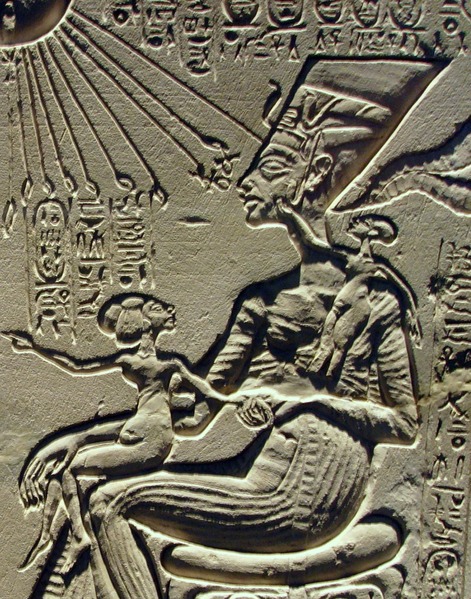
The ancient Egyptians venerated the '' mother '' and its key role in the community
Archived for one of the ancient walls
Ancient Egyptians were eager to call in their community to a mother's
love and affection and the mainland , and their children thanks and
remember the importance of satisfaction with them , pointing out that
the history books full of tips developed by the wise men in front of
their children to respect and care for the mother .
The mother in ancient Egypt contributed an important role and great at
the same time , it was based on the care of her family and
child-rearing , and overflowing with love and affection to their
children next to their interest in her husband , and oversees the
management of the home and the management of its affairs and the
provision of comfort in it for everyone.
And
that the mother was a central pillar of all household affairs was to
wake up early and prepares breakfast for the family of the husband and
the children , pointing out that the household chores and child care
work mother fundamental are those that lay the foundation and lay the
rules in the construction of her body and mind , which attends to the
health and Tdaabh mercy and compassion and teach words initial and remain under the care and supervision even enter school.
Women
in Ancient Egypt at the stage of motherhood , she participated her
husband in raising his children in some years of age , and chisels to
him in some time, where she shared in their care in the early stages of
their childhood and their youth , and converted to Islam to him the
reins to them and her in the early stages of maturity , pointing to
pictures mother care for her son in his youth , including that she was carrying his food and drink to him in his school all -back .

He
confirmed that the body of religious literature widower mother
preferred to carry the burden of raising her son in the person of Isiah
'' goddess '' or'' Isis '' and had embraced her child '' Hur '' after
the death of his father and disappeared in the jungles of the Delta for
several years , earning him the subtle to retrieve his father, the king , and record narrators Egyptians
preferred the mother and son in Legends religion narrated by one of
Kadisathm they devote themselves to raising her son and made sure to
teach school Volhakth mastered the writing styles and learn from the
arts of war and fighting.
He noted that for this role with the supervisor for some mothers have
feared the consequences of society's values Lin mother with her
children and the results of cosseting them in their youth stages and
insisted to take over their father ordered them at this stage without
them , or at least supervised by them and where .
Children in ancient Egypt had them luck most of the care and
tenderness under knit family , they were the apple of the eyes of the
parents , are doing their utmost to raise them nurture sound ,
indicating that the child was the first stages of life and Ahgaha care ,
whether at the level of the family or the community.
Egyptian
man in ancient Egypt was loves children , prompting him to be careful
reproduction and even early marriage even be able to raise his children
before they filed by the age, and if the house is the birthplace of
Education and their respective fields first is subject to the child
learns and draws acquaintances initial report on human life and the
bloom of his mind where he was for the stability of the family and cohesion of the biggest impact in the formation of his psyche right configuration .
And
fees and statues were showing on the bezel attached to the parents to
their children and Ahatthma care and love, where describes the father
sitting a child in his lap or maintained his hand Hania it or accepts ,
also represented the mother , a suckling small or combing her daughter
sponsored and loving and happy parents to see them play and have fun ,
especially when they take them on trips hunting
birds, fish , and whatever it was Alolua pamper their children and a
great understanding of the harbor and they , in turn, show a deep
respect for their parents next to love.

.jpg "The importance of women in ancient Egypt Khntekaws Queen of Egypt")